
Tracy Chapman’s Crossroads
Friday is fun because it’s music — which means links and playlists. Today I’m revisiting the second Tracy Chapman album. A quiet masterpiece.

A while ago, I wrote about Tracy Chapman here (below), giving shouts to her first four albums — all of them great, though you might argue for diminishing returns, especially when you think of radio airplay and hits.
Tracy Chapman
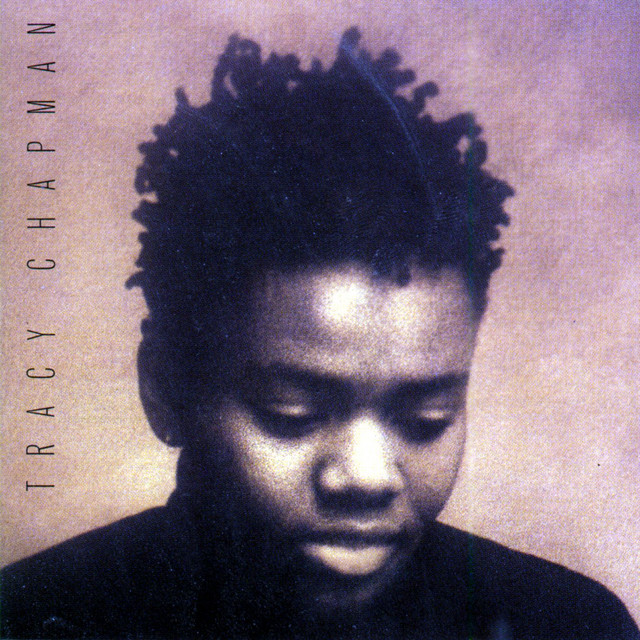
That first Tracy Chapman album is a masterpiece. I loved it when I first heard it. I remember vividly listening to it on the side of the road over and over. My mum had to sleep after a long drive and a rough ferry crossing, so we parked up out of Wellington and while she rested, I played the one tape in the car on a loop; read the lyrics, and the liners…
That piece — which you can only read if you’re a paying subscriber, or if you take a free trial — was adapted slightly from an earlier bit I wrote really focussing in entirely on the self-titled debut:
Revisiting Tracy Chapman by Tracy Chapman: Tracy Chapman’s Classic Self-Titled Debut

A couple of weeks back we’re driving back into Wellington, having been up the coast. It was a long Sunday drive and we had been playing a bunch of Sunday afternoon music in the car: Paul Buchanan’s Mid Air, Mark Lanegan’s I’ll Take Care Of You, Lawrence Arabia’s The Sparrow
Again, paywall — unless you sign up or take a trial, etc.
But the gist is to say that the first album has been in my life since it was released. And even with long periods away from it, I still know every word. In recent years, since I first wrote about the album, I’ve been revisiting it more often. It’s just such a perfect collection.
But you know something? I might actually prefer Crossroads — the difficult second album. The record company probably only heard the one single, the opening, title track — which is glorious really. But from there the album goes introspective, political, and interrogates the soul.

Now, the debut was no picnic really — songs about abuse and neglect, domestic violence, and the dreams to escape. You could see that aspect as a very positive spin, but it wasn’t a ‘happy’ record by any stretch.
Crossroads has an even more sombre musical mood, it has an even more exquisite set of background players and arrangements. It is a truly beautiful record.
One that I loved at the time — and have listened to almost as much as the self-titled album.

I’ve owned the album on all three formats, in some cases more than once. And I’m desperate to find it on CD once more.
Listening to it lately, it’s hard not to hear a whole new poignancy and urgency in Subcity with its lines about people not wanting a handout/just a way to make an honest living. And — “Won't you please give the President my honest regards / For disregarding me".
And I’ve always had a thing for the album-closer, All That You Have Is Your Soul. That’s a deep lyric. And a beautiful song — and sentiment. Even cribbed it for a poem:
Neil Young plays gently at the piano on that song — he’s on harmonica earlier on the album. I almost wonder if the vibe here had some impact on his Harvest Moon, and the songs he was writing towards that.
This record arrived barely a year after that astonishing, smash-hit debut. Some of the songs on Tracy Chapman were written in the late 70s and very early 80s and worked up in small bars (and fast cars) and from busking to stadium benefits.
A year later, Crossroads features all new songs. And it has such an integrity to it — no sellout here. Just commercial enough to sell, and for her to not be dropped from the label, but a real statement around who was going to be controlling her career. Tracy Chapman wrote songs for herself, and her audience. In that order. Lawyers, labels, and industry folk were last in the picture. Squeezing themselves in the frame where they could.
Earlier this week, as I sat watching The Pogues —

— I wondered where songs come from. A tune like A Pair of Brown Eyes or A Rainy Night In Soho: Monumental. They are like The Night They Drove Old Dixie Down or Body & Soul, or Lay Lady Lay. Immortal songs.
Well this is true of Crossroads too. Bridges, This Time, Be Careful of My Heart, A Hundred Years, All That You Have Is Your Soul. The emotional weight of half the album is almost enough to capsize the thing. But, guided by Tracy’s hand, and voice, these are also deceptively small songs. They breeze by. They don’t feel as heavy, until you stop to read the lyrics, to rewind to certain moments, to listen on repeat. You could even think, I’m sure, that maybe these songs are actually slight. But they’re most certainly not.
A group of the great session players, people that had powered albums by Joni and James Taylor and Carole King, sit comfortably inside these tunes. Giving further grace, never disrupting the architecture.
I think of Jackson Browne at the peak of his powers, of Joni and those early 80s Rickie Lee Jones albums (like Pirates — astonishing).
Crossroads is that sort of record. It’s Running on Empty, it’s Mud Slide Slim, it’s For The Roses. Maybe even Blood On The Tracks — though that’s a far more cynical and bitter set of songs, really.
Tracy Chapman’s second record is so many beautiful things. But the ‘confessional’ singer/songwriters of the 70s were so concerned with themselves primarily. I love how with Tracy Chapman it is all about worldview, it is about social impacts, and community damage. She mastered the political song by making them feel so personal, pertinent, and permanent.
And for all that universal writing — thinking outside herself, looking to groups of people and observing beyond herself — I think one of the reasons these really great Tracy Chapman songs stay with us is because they are hers. No one else could do it. That’s why there are no decent Tracy Chapman covers. I know, I know, there was a big one a few years back. It sold well. But it wasn’t good. It did not improve on the original in any way. Because you cannot.
Crossroads is an album that makes me want to cry, makes me want to write, makes me want to listen.
A most extraordinary, and beautiful album. There’s really no need — and nothing profound in saying it anyway — to call this ‘better’ than the debut, or indeed ‘better’ than anything. But this is an album I think about a lot. And an album that so effortlessly commands my attention.
I guess that’s all I wanted to say.
And it’s Friday. So I got your back with our regular playlist, y’all:
